
Guangdong Province
Shenzhen
A practical Shenzhen guide for deciding whether the itinerary is city-only or cross-boundary, and for choosing a district that fits the plan.
Suggested stay: 2 days
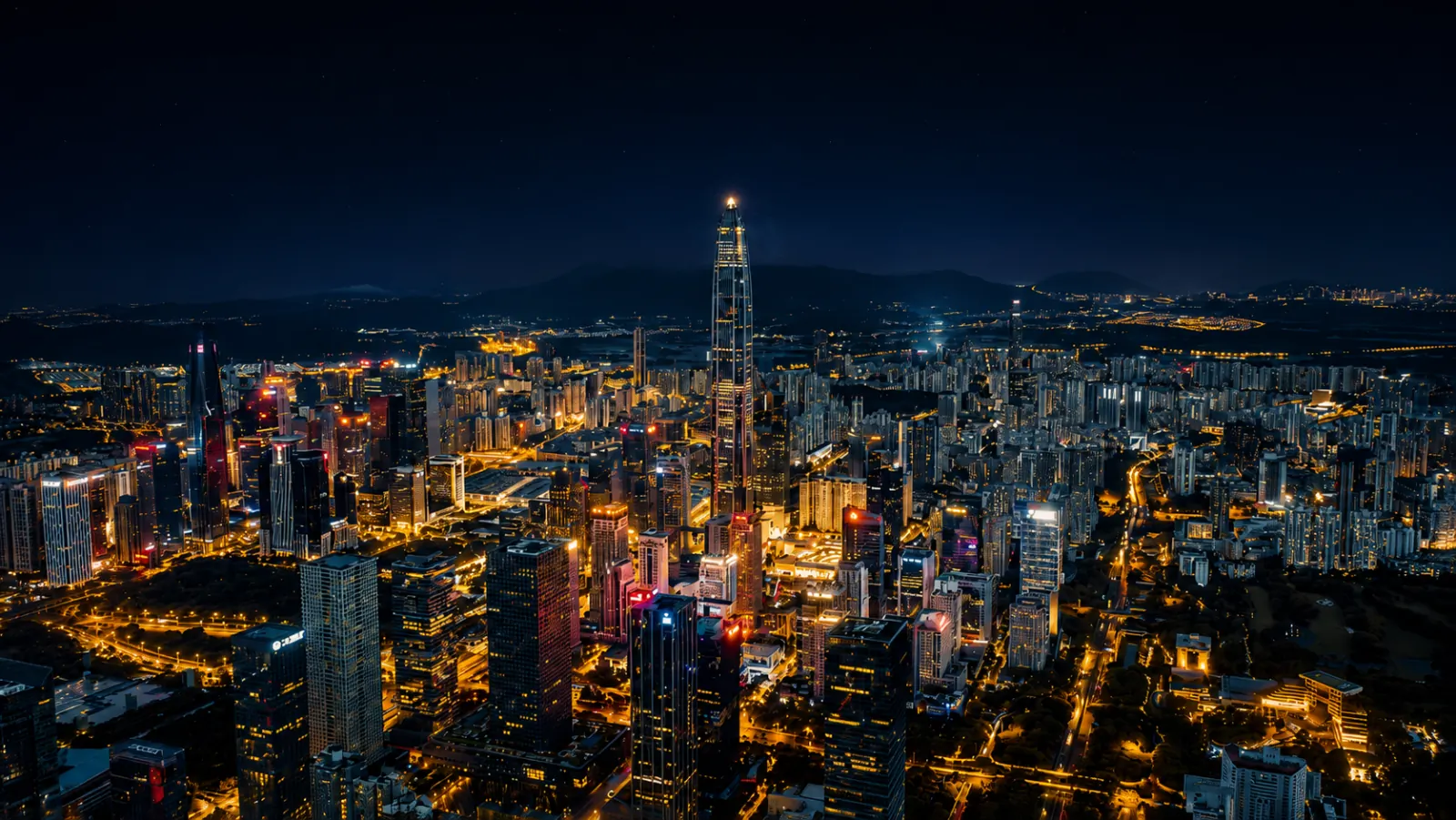
Shenzhen is a spread-out coastal metropolis. Plan by district and purpose—waterfront, parks, museums, business, theme attractions or the border area—rather than trying to “see Shenzhen” in one continuous circuit.
Shenzhen at a glance
| Category | Practical assessment |
|---|---|
| Recommended stay | 2–3 full days |
| Arrival geography | Bao’an Airport is west of central and eastern visitor districts |
| Core transport | Metro for longer moves; a documented car for the final entrance when useful |
| Booking pressure | Check parks, museums, waterfront activity and events with their operator |
| Walking demand | Moderate; higher at waterfronts and very large developments |
| Main planning risk | Treating a border crossing, coast outing and city visit as one easy day |
Arrival, rail stations and border-aware transfers
Shenzhen Bao’an International Airport — 深圳宝安国际机场 — lies west of much of the city. Confirm terminal and current ground-transport details through the airport operator and your airline. Save the full Chinese hotel address and the actual car entrance; a pin inside a commercial development can be far from the lobby. Keep the arrival evening simple, with a documented transfer and a delayed-flight fallback.
Shenzhen North Railway Station — 深圳北站, Futian Railway Station — 福田站, Shenzhen Railway Station — 深圳站, and Shenzhen East Railway Station — 深圳东站 are different places. Confirm the exact service in China Railway’s official 12306 system, then check the passenger entrance, passport details and hotel-to-station route. For any cross-boundary journey, treat the border as its own itinerary and verify current requirements with the responsible authority and carrier; this guide does not determine eligibility.
Start with your district
Futian, Luohu, Nanshan and the eastern coast answer different travel needs. A hotel chosen for nightlife may be poor for an early meeting or a beach day. Before booking, map the actual entrance, nearest station and last transfer; district names alone are too broad for an arrival plan.
Choose a base by the commitments that cannot move: an arrival, a meeting, a border crossing or a timed reservation. Then let nearby parks, food and shopping be optional additions rather than reasons to criss-cross the city. Check whether the hotel address identifies a lobby, a tower or a large compound, and keep the Chinese address saved offline. These simple details make the first and last travel days much less fragile.
Treat the border as a separate itinerary
If Hong Kong is part of your journey, do not make assumptions about immigration eligibility, documents, exit procedures or onward tickets from a city guide. Build in substantial time and verify the current official requirements with the relevant authorities. This guide does not assess entry permission.
Keep border planning separate from sightseeing promises. A day that includes a crossing should have a clear primary purpose and enough margin for transport, queues and any official checks. Do not rely on social posts, a hotel conversation or an old itinerary for document requirements. If the current official process is unclear, seek clarification from the authority responsible before committing to non-refundable transport or accommodation.
Plan parks and waterfront for conditions
Coastal walks and parks can be attractive, but heat, rain, air quality, event controls and seasonal conditions change the experience. Carry water, sun protection and a charged phone. Pick a clear meeting point and avoid assuming a long green route is continuously open or accessible.
Decide whether your aim is a short view, a longer walk, a picnic or time near the water, then choose a route that matches the conditions. Check the forecast before leaving and identify a sheltered alternative nearby. If the route becomes uncomfortable, turn back while you still know the way rather than pushing on to reach a distant pin. For a group, a named entrance or transit exit is a better meeting point than a broad park name.
Choose one modern-city experience
Shenzhen has technology, design, shopping and theme-park narratives competing for attention. The Shenzhen municipal Travel Guide presents the city through tourism and cultural-sports authority material; use it to identify candidates, not to promise that every venue, attraction or service is operating.
Give each day one central interest. A museum-and-waterfront day, a design-district day or a quiet local-food day will usually be more practical than a scattered sampler. Consider the travel between activities as part of the visit rather than empty time. If an attraction needs a fixed reservation, build the other choices around it and keep an optional nearby stop for an early finish or changed conditions.
Make museum time intentional
Museums, galleries and creative districts are stronger when paired with nearby food or waterfront time, rather than inserted between distant attractions. Check a venue’s own official account for reservation, identification, bag and closure rules, and save the exact Chinese address.
Read the current visitor instructions before you set out, especially where a venue controls entry in time windows. Save the confirmation and the stated entrance separately from a general map pin. Allow a little time to find lockers, security or the correct building within a larger cultural complex. An indoor visit can be a useful weather fallback, but only when its current rules have been verified rather than assumed.
Avoid map assumptions in large developments
Office towers, shopping complexes and theme attractions can have gates on different roads. Share the Chinese destination name in your transport app, then compare the arrival point with the venue’s instructions. A map pin at the centre of a complex may leave you a long walk from the entrance.
Before ordering a vehicle, check whether the pickup and drop-off level is above, below or beside the street you are viewing. Keep the app route visible until you see the signed entrance, and do not follow a shortcut through a service road simply because it looks faster. If you arrive at the wrong side, use the complex’s official directions or a staffed information point to reorient rather than guessing across traffic.
Keep electronic basics reliable
Use only official app-store listings and complete necessary account verification before relying on a payment or ride service. Carry a backup payment method and power bank. Do not scan a payment or “verification” code offered by an unsolicited person.
Test essential tools while you have time and a stable connection, rather than at a station exit or when a meal bill is due. Keep enough battery for navigation and your return route, and maintain a paper or offline copy of the accommodation name. A backup does not need to be elaborate: it can be a second payment option, a saved address and a plan to return to a well-marked transport point if an app fails.
Use district sources for district claims
The Nanshan Government Online English portal is a first-party source for Nanshan-specific public information. It is more useful than a general city page when a district venue, event or service is involved.
The same distinction applies across the city. A district portal can provide useful context, but the organisation that operates a venue should confirm practical facts such as entry, closures and reservations. Do not treat broad promotional material as a promise that a particular service will be available on your travel date.
Re-check current city notices
Shenzhen Government Online is the municipal English portal. Use it to locate official public information, but verify an attraction, transport change or event with the organisation that controls it. Municipal background copy is not a guarantee of access.
For any activity that requires time or money, use a current source from the organisation that controls it. If that source is unavailable, keep the plan flexible rather than relying on a confident estimate. This lets the guide offer useful orientation without implying guaranteed access.
Before you go and maintained planning guides
- Confirm Bao’an Airport or the exact rail station, hotel entrance and Chinese address.
- Keep passport-linked confirmations, Chinese site names, entry gates and the return route offline.
- Use a map that searches Chinese names; carry a power bank, translation backup and second payment option.
- Keep a border crossing separate from sightseeing and check it only through responsible sources.
- Recheck current operator information for coastal weather, park access, museums and events.
Use the China Travel Pulse visa and transit checker as a planning tool, then verify the whole route with the responsible authority and carrier. Keep the maintained guides to airport transfers, high-speed rail, attraction bookings, payments and map apps nearby.