
Guangdong Province
Guangzhou
A practical Guangzhou guide for matching business or leisure travel to the right neighbourhood, river crossing and rail or airport choice.
Suggested stay: 3 days
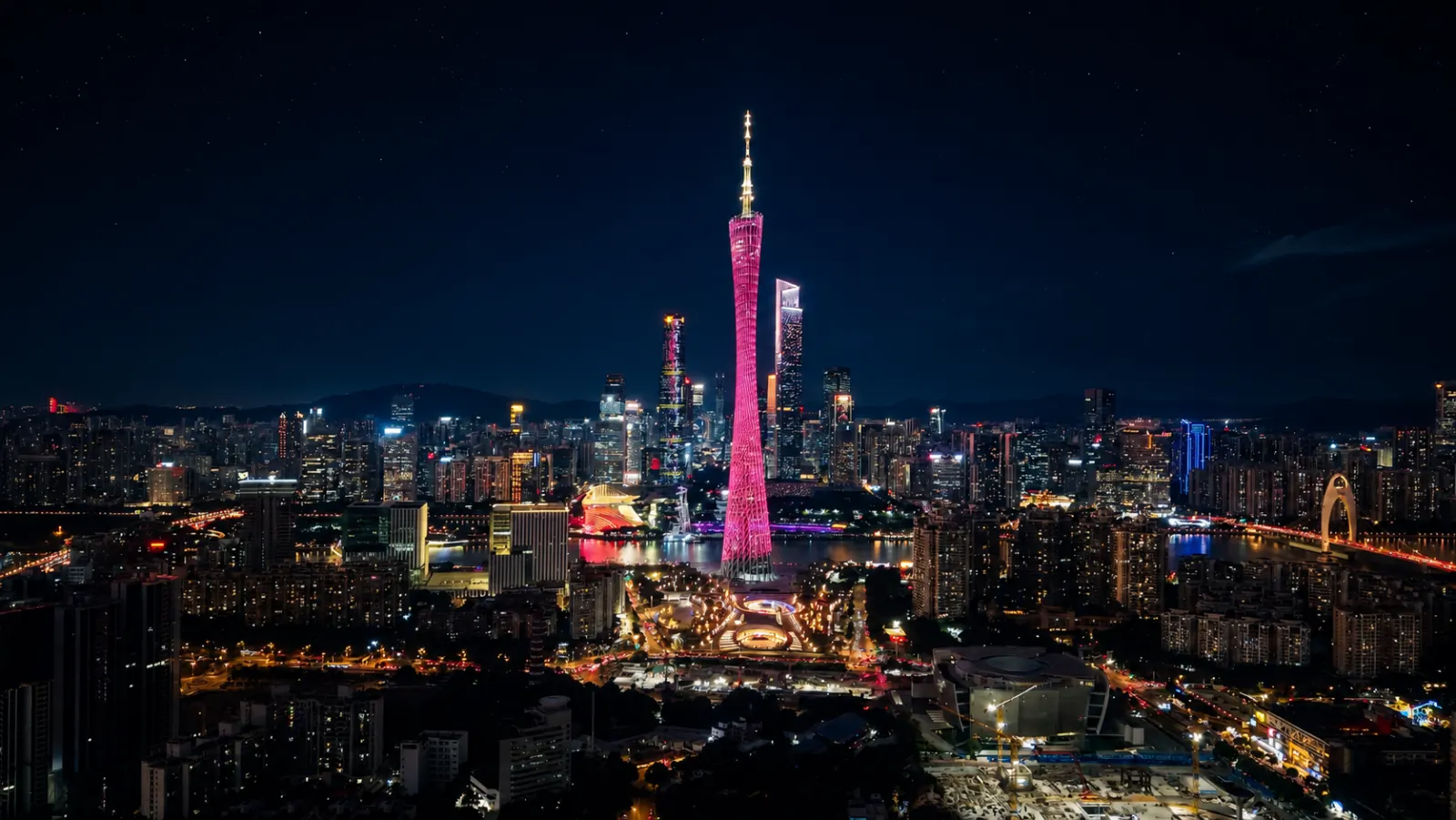
Guangzhou rewards a neighbourhood-by-neighbourhood plan: historic streets, riverfront, food districts and modern landmarks are better treated as separate choices than a single sightseeing loop.
Guangzhou at a glance
| Category | Practical assessment |
|---|---|
| Recommended stay | 2–3 full days |
| Arrival geography | Baiyun Airport is north of the central river districts |
| Core transport | Metro for predictable cross-city moves; taxi or ride-hailing for luggage and final access |
| Booking pressure | Check current rules for major observation, museum and river activities |
| Walking demand | Moderate to high in historic streets, stations and humid weather |
| Main planning risk | Trying to combine distant river, old-city and modern districts in one half-day |
Arrival, rail stations and the first transfer
Baiyun Airport: match the transfer to the first night
Guangzhou Baiyun International Airport — 广州白云国际机场 — is north of the principal visitor districts. Check the airport’s official passenger information and your airline for terminal and current transport arrangements. Save the hotel’s full Chinese address and vehicle entrance before arrival. A hotel inside a pedestrian lane or major development can have a very different drop-off point from its central map pin.
Airport rail, buses, official taxis and recorded ride-hailing all have a place, but the best choice is the one that still works after luggage, weather and a late landing. Leave the first evening simple. If the flight is delayed, a nearby meal and an early start are more valuable than trying to reach a fixed riverfront booking.
Guangzhou’s railway stations are not interchangeable
Guangzhou South Railway Station — 广州南站 —, Guangzhou East Railway Station — 广州东站, Guangzhou Railway Station — 广州站, and Guangzhou Baiyun Railway Station — 广州白云站 can lead to different parts of the city and different services. Confirm the exact service in China Railway’s official 12306 system, then plan the route to the passenger entrance rather than a broad station pin.
For a high-speed-rail day, check the passport details on the ticket, station name in Chinese, entrance, security allowance and final hotel-to-station journey. Avoid crossing Guangzhou with bags after lunch just because the departure board says “Guangzhou.”
Set a realistic map
The city is extensive, warm for much of the year and crossed by major roads and the Pearl River. Choose one area for each half-day, check the destination entrance in Chinese and avoid filling the plan with landmarks that only look close on a map. A short transfer at rush hour can become the day’s biggest delay.
Write down a first choice and a nearby alternative for each half-day. That makes it easier to respond to rain, a reservation issue or an unexpectedly slow transfer without turning the day into a series of last-minute searches. Before you leave, identify where you would take a break and how you would return. A calm plan uses the city’s scale as a reason to slow down, not as a reason to rush between distant districts.
Choose a stay around your first commitments
Your best hotel base depends on airport or railway arrival, early bookings and the style of visit you want. Ask for the exact drop-off point and keep it saved offline. If the hotel is inside a large development or pedestrian area, a central pin may not be enough for a driver.
For arrival and departure, give luggage and unfamiliar transport their own time. Check whether the address refers to a building, a lobby or a complex gate, and keep the Chinese version available to show a driver. If a late arrival is possible, arrange the first transfer through a documented channel and retain the booking details. The simplest first evening is often a meal and short walk close to the hotel.
Put Canton Tower in a broader river day
The Guangzhou government’s Canton Tower page describes the landmark’s city-sightseeing role. It is not a current ticket page. Confirm observation access, weather limits, timed-entry practice and the correct entrance with the operator before travelling across the city just for a slot.
Treat the tower as one part of a river-area decision, not an automatic all-day commitment. Decide whether your priority is the observation experience, an exterior view, a nearby meal or a waterfront walk. Then use the operator’s current information to establish whether a visit is possible. If it is not, have an alternate neighbourhood activity ready so that a single unavailable time slot does not disrupt the rest of the day.
Combine heritage streets thoughtfully
Historic districts can be enjoyable for architecture, small museums and food, but they become less pleasant when treated as a race between photo spots. Pick one route, leave time for shade and rest, and save the return route before your battery runs low. Verify whether small venues need a reservation rather than relying on a map listing.
Pay attention to thresholds and side streets rather than trying to cover every name on a popular route. A short loop with time to pause may be more satisfying than a long walk in heat or rain. If your group separates, choose a specific business or station exit for reunions. Keep your route practical: pedestrian streets, construction boundaries and complex entrances can make a nearby destination harder to reach than it appears.
Let food set the rhythm, not the itinerary
Guangzhou’s eating culture makes long meals an important part of the day. Go early or accept a queue, communicate allergies clearly, and order in stages. A popular dish or restaurant is never evidence that it is suitable for every dietary requirement.
Carry a clear written note in Chinese if an allergy or dietary restriction is serious, and ask about sauces, broths and shared preparation when relevant. Allow enough time to make decisions rather than ordering quickly because people are waiting behind you. Keep water and a simple backup snack available on a busy day. Good travel meals leave room for comfort and conversation; they should not create pressure to continue when you need a rest.
Use official names in searches
The Guangzhou International page on the 2025 Top Eight Sights is useful for officially presented English landmark names. Use it to cross-check a Chinese map search, but do not infer a fixed recommended route or current event from the article.
Use English-name lists to reduce search ambiguity, then confirm the exact Chinese name and visitor entrance with the responsible venue. Names can be shared by a district, a park and a commercial development, so a map result alone is not proof of the intended place. Treat dated city-news features as cultural context unless a current operator page supports an operational statement.
Keep the Pearl River flexible
Riverside plans depend on heat, rain, access points and seasonal arrangements. Decide whether your priority is a promenade, a tower view, dinner or a cruise, then verify the responsible operator’s current details. Do not assume that a beautiful waterside pin is a boarding pier.
Before travelling to the river, choose a clear finishing point and confirm how you will leave after dark. Waterfront roads, parks and commercial spaces may be adjacent without being directly connected. If a boat activity matters to your trip, keep the operator, boarding deadline and exact pier address in one offline note, and avoid scheduling a critical onward journey too tightly after it.
Be deliberate with transport changes
Keep airport, railway and neighbourhood transfers separate from sightseeing time. For the first ride, use a documented taxi queue or an in-app booking and confirm the vehicle plate. Save names and addresses in Chinese, especially where a destination has multiple entrances.
Make a habit of checking the pickup point in the app before you walk away from the entrance. Large stations and malls can have several vehicle levels, and a mistaken level can cost more time than a short metro ride. Do not accept a change to a different vehicle or payment process from an unsolicited person. If a route is confusing, return to a staffed, documented point rather than improvising on a roadside.
Use municipal material as a starting point
The Guangzhou International portal provides official city orientation. The municipal Expat’s Guide PDF provides candidate attraction/address context. Both must be date-checked against the responsible venue before operational use.
Use city material for high-level orientation, but use a venue, transport operator or official booking channel for hours, access, prices and conditions. Do not turn a descriptive municipal paragraph into an instruction to buy a ticket or take a particular route. For seasonal river activities, events and third-party services, confirm the current responsible source before committing time or money.
Before you go and maintained planning guides
- Confirm the airport, full station name and the hotel’s real vehicle entrance in Chinese.
- Keep passport-linked rail and attraction confirmations offline, along with the visitor gate and a return route.
- Use a map that can search Chinese names; keep a power bank, a second payment option and a translation backup.
- Group each day by district, with a sheltered pause or indoor option for heat and rain.
- Recheck the responsible operator’s current information before paying for a timed entry, river activity or special transport.
- For food allergies, use a written Chinese note and ask about sauces, broths and shared dishes.
Use the maintained China Travel Pulse visa and transit checker for a planning assessment, then verify the complete journey with the responsible authority and carrier. The practical national guides to airport transfers, high-speed rail, attraction bookings, payments and map apps are maintained separately so this city guide can concentrate on Guangzhou’s geography.