
Chongqing Municipality
Chongqing
A practical Chongqing guide that separates the steep central core, river crossings and heritage day trips so visitors can build a realistic route.
Suggested stay: 3 days
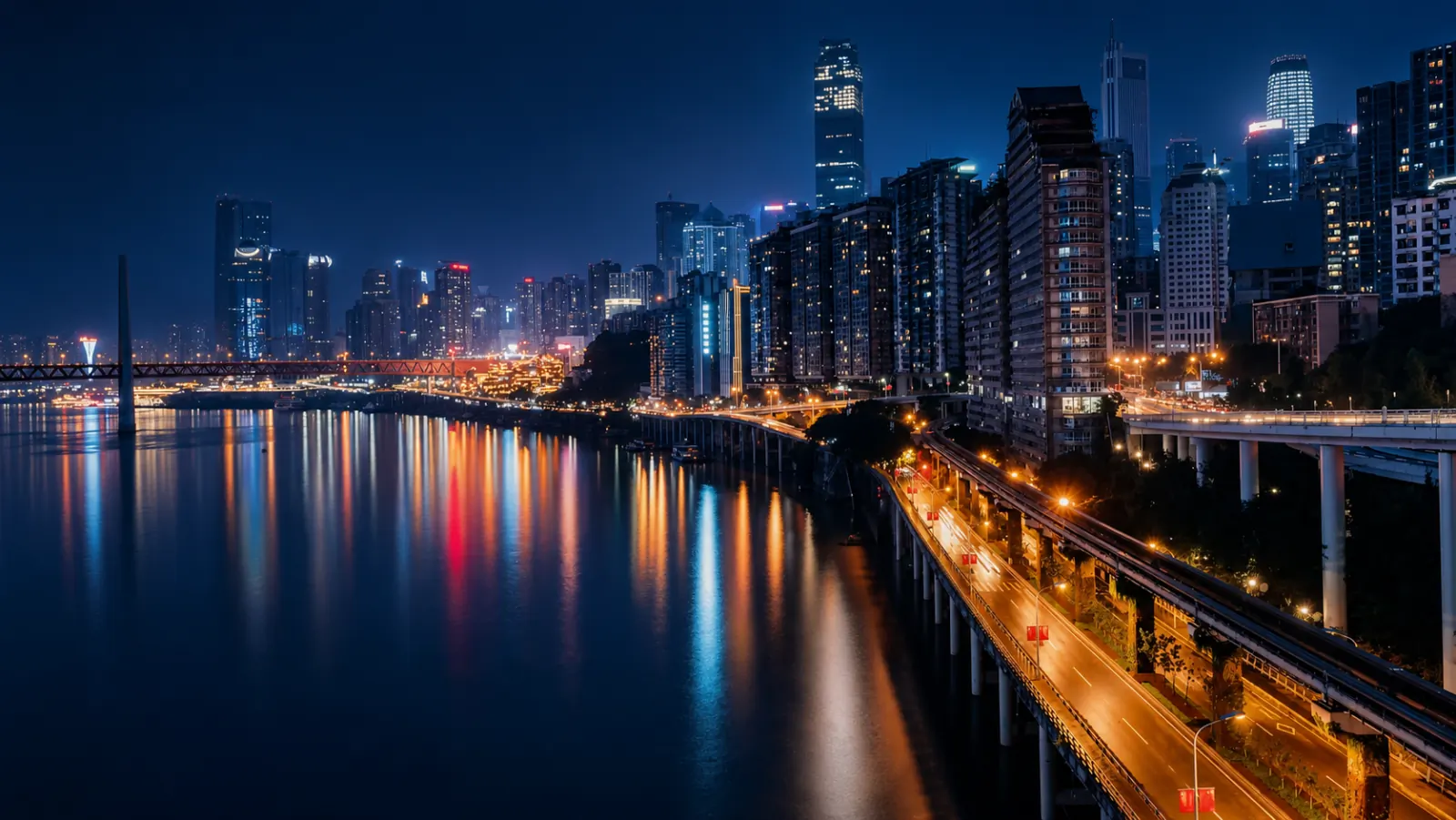
Chongqing is a city of rivers, hills, bridges and stacked streets. It is exciting precisely because a map can be misleading: two pins may be close in a straight line but separated by a slope, an elevated road, a station exit or several floors. Build the trip around small geographic clusters, save entrances in Chinese, and leave more time than a flat-city itinerary would suggest.
Chongqing at a glance
| Category | Practical assessment |
|---|---|
| Recommended stay | 2–3 full days; add a separate day for Dazu if it is a priority |
| Arrival geography | Jiangbei Airport is north-east of the central river districts |
| Core transport | Metro for longer cross-city moves; taxi or ride-hailing for awkward final climbs |
| Booking pressure | Check timed-entry rules for major museums, river trips and heritage excursions |
| Walking demand | High: stairs, slopes, long station interchanges and changing levels |
| Main planning risk | Treating riverfront, hillside and railway locations as if they were one level |
The best first-trip rhythm is one central district in daylight, a rest or indoor stop, then one nearby evening view or meal. Chongqing rewards an unhurried plan more than a landmark race.
Arrival: choose the airport and station carefully
Jiangbei Airport and a first-night plan
Chongqing Jiangbei International Airport — 重庆江北国际机场 — is the practical reference point for most air arrivals. Check the airport operator’s current passenger information and your airline for the terminal, ground-transport arrangements and late-arrival options; these are operational facts, not permanent guidebook details. Save the hotel’s full Chinese address and its actual vehicle entrance before landing.
For an arrival with luggage, decide whether the hotel is convenient for a rail connection, central sightseeing or simply sleep. Do not promise yourself a river-view evening after a delayed international arrival. The useful first-night plan is a documented transfer, a meal near the hotel and a fully charged phone for the next morning.
Railway station names are real geography
Chongqing North Railway Station — 重庆北站, Chongqing West Railway Station — 重庆西站, Shapingba Railway Station — 沙坪坝站, and Chongqing Railway Station — 重庆站 are not interchangeable. Your ticket, not an itinerary summary, determines the station. Search the exact service through China Railway’s official 12306 site, then check the hotel-to-station journey in the relevant direction before booking a departure-day activity.
Allow time for security, locating the right entrance and moving through a large station with bags. A hotel close to one station can be inconvenient for the river districts, so choose it for a genuine early departure rather than because a map calls it central.
Where to stay: choose a river district, not a vague centre
Jiefangbei and Yuzhong for a first city stay
Jiefangbei — 解放碑 — and the Yuzhong peninsula are practical for travellers who want central streets, river views and a broad choice of food close together. The trade-off is crowds, slopes and complex pickup points. Ask a hotel which lobby entrance a driver should use, not merely for its street address.
Jiangbei, Guanyinqiao and Shapingba for different priorities
Jiangbei — 江北 — can suit a modern commercial stay or an itinerary leaning toward the north side of the rivers. Guanyinqiao — 观音桥 — is useful for dining and a local urban atmosphere. Shapingba — 沙坪坝 — is a more deliberate choice for a university-side plan or a Shapingba rail departure. None makes every well-known sight convenient.
Before paying, test the route from the named hotel entrance to the next morning’s destination. In a hilly city, a property that appears beside a metro symbol may still involve stairs or a long indoor complex walk.
Getting around: treat level changes as travel time
Metro first, car for the difficult final kilometre
The metro is usually the clearest way to cross long distances, but station exits can put you on different streets or elevations. Check the destination’s entrance, then select an exit that genuinely serves it. A taxi or ride-hailing trip is often worth considering for luggage, rain, late evening or a final climb that would otherwise turn into an uncertain walk.
Use only the recorded trip or an official taxi queue. At a station or scenic district, follow signs to the official pickup area; a roadside pin can be on a level a car cannot reach. Compare the app’s plate and driver details before boarding.
Rivers are orientation aids, not continuous promenades
The Yangtze and Jialing explain the city’s shape, but a waterfront on the map may be split by roads, docks or vertical access. Before walking downhill, identify the return route. If meeting a companion, use a named shop, gate or station exit rather than “by the river.”
Reservations and identity checks
Book an essential attraction only through its responsible official channel or a clearly identified authorised seller, and keep the confirmation offline. Check the visitor name, date, time window, document requirement and entrance. A confirmation for a large complex does not automatically tell you where the queue begins.
For rail tickets and any attraction that asks for identification, carry the original passport used for the booking. Do not send a passport image or payment code to an unsolicited helper. If the official instructions are unclear in a language you read, ask the operator through a published contact route or request assistance from your accommodation.
River sightseeing needs a separate check
The city is closely associated with the Three Gorges and river travel; the State Council’s report on Chongqing cultural tourism provides context, not a current pier, timetable or ticket rule. A city cruise and a longer Yangtze journey are different products. Confirm the operator, pier name, boarding deadline, luggage terms and return point directly before committing a departure or rail connection.
Chinese names, maps, payment and offline preparation
Save these navigation names before leaving the hotel:
- Chongqing Jiangbei International Airport — 重庆江北国际机场
- Chongqing North Railway Station — 重庆北站
- Chongqing West Railway Station — 重庆西站
- Jiefangbei Pedestrian Street — 解放碑步行街
- Hongyadong — 洪崖洞
- Ciqikou Ancient Town — 磁器口
- Liziba Station — 李子坝站
For every booking, keep the Chinese name, full address, nearest metro station and exit, visitor entrance and pickup point together in one offline note. Set up a map that searches Chinese names, translation, a working payment method and rail access before relying on them at a queue. Carry a power bank and a second payment option; a small amount of cash can be a useful contingency, but it is not a substitute for checking how a particular venue accepts payment.
A practical three-day Chongqing route
Day one: central Yuzhong, then an evening nearby
Start with one Yuzhong-area anchor and explore nearby streets at a pace that allows for hills and entrances. Make Hongyadong an evening-area choice rather than a promise of a specific photograph: crowds and weather can change the experience. Eat near the area and return by a known station exit or documented car pickup.
Day two: Shapingba-side history and local streets
Ciqikou is best given its own half-day with a clear arrival and return plan. Pair it with a nearby museum, café or Shapingba-side activity only after checking the walk and transport. Do not cross the entire city for a fixed evening reservation unless there is a generous buffer.
Day three: choose one specialist outing
Choose either a more relaxed urban district, a verified river activity or an excursion. The UNESCO inscription for the Dazu Rock Carvings confirms the site’s World Heritage value, but not today’s transport, ticketing or access. If Dazu matters to you, give it a dedicated day: outbound travel, the correct visitor gate, time on site, food and the journey back all need space.
Weather, slopes and peak periods
Rain makes steps, viewpoints and hillside streets slower; heat and humidity make an apparently short walk draining. Wear shoes with grip, keep water and a rain layer available, and put the most exposed activity in the part of the day best suited to the forecast. A museum, meal or hotel rest nearby is a better fallback than another long cross-city transfer.
Major public holidays and school breaks can increase pressure on stations, popular streets and scenic sites. Check current holiday dates and individual venue notices before buying non-refundable transport. In busy periods, make fewer fixed commitments and arrive earlier for a booked entry.
Food: hotpot without an avoidable surprise
Chongqing hotpot can be intensely spicy and numbing, and a shared broth can contain ingredients that are not obvious from the menu. State allergies clearly, ask about the broth and sauces, and order a manageable amount before adding more. “不要辣” (bú yào là, no chilli) and “我对花生过敏” (wǒ duì huāshēng guòmǐn, I am allergic to peanuts) can help, but a written allergy note in Chinese is safer for a serious restriction.
At busy restaurants, QR ordering may be common. Ask staff for help or a non-QR alternative if needed; do not use a payment link offered by an unrelated person. Keep the first substantial meal before you are exhausted from walking, especially on a day of steps and viewpoints.
Chongqing’s vertical city: one operational rule
Liziba and the city’s multi-level architecture can make a short map distance visually compelling and physically awkward. A bridge, platform or building façade may be visible from the right area but unreachable from the level you are standing on. Check signed pedestrian routes and transit exits, keep hands free on stairs, and do not take an unlit shortcut in order to recreate a social-media route.
For mobility needs, a stroller or heavy luggage, ask the accommodation and the specific venue for the current accessible entrance. A broad claim that an area is walkable does not answer whether the required gate, elevator or roadside pickup is usable.
Common mistakes and leaving Chongqing
The frequent mistakes are stacking river districts in one evening, saving only English map pins, treating Hongyadong as a single entrance, and booking a train from the wrong station. Another is scheduling a long heritage outing on the same day as an arrival or departure. Keep your last morning on the correct side of the city for the station or airport.
For an onward train, reconfirm the station, ticket/passport match, entrance and route the evening before. For an airport departure, add time for the hotel exit, road or rail transfer, terminal, baggage and security rather than calculating from flight time alone.
Before you go
- Confirm the airport, exact rail station and full Chinese hotel address.
- Save Chinese names, entrances, station exits and official pickup points offline.
- Reserve only the attractions that genuinely need a timed slot, and keep passport-linked confirmations.
- Pack for wet steps, hills and heat; keep a low-effort alternative for rain.
- Check any river trip, Dazu visit or late transport directly with the responsible operator.
- Prepare payment, maps, translation and a power bank before your first queue.
Keep the national essentials maintained
Use the China Travel Pulse visa and transit checker as a planning tool, then verify the complete journey with the responsible authorities and carrier. For trip mechanics, keep the maintained guides to airport transfers, high-speed rail, attraction bookings, payments and map apps nearby.
Chongqing becomes much easier when each day has one geographic centre, one verified entrance and one simple way home. The city’s complexity is part of its character; planning around it is what leaves room to enjoy it.