
Beijing Municipality
Beijing
A practical Beijing city guide for foreign visitors: choose the right airport and railway station, secure reservations, plan by district and treat the Great Wall as a separate transport day.
Suggested stay: 4 days
Beijing is rarely difficult because there is nothing to do. It is difficult because too many important places sit behind separate booking systems, security gates and long cross-city journeys. A day can look sensible on a map and still unravel when a museum entry slot, a station exit or a hotel location is wrong.
Treat the city as several travel zones joined by a very large metro network, rather than one walkable historic centre. The Forbidden City, Temple of Heaven, Summer Palace, airport districts and Great Wall sections do not belong to the same day simply because they appear in the same guidebook. The practical work happens before arrival: choose the right airport, save the Chinese names of your entrances, and make reservations before fixing the rest of the day.
This guide is for travellers arranging Beijing independently. It concentrates on the decisions that prevent a bad booking: where to sleep, which railway station is on the ticket, how much time a “short” metro journey can take, and why the Great Wall needs its own transport plan.
Is Beijing Right for Your Trip? At a Glance
Beijing works well for a first trip if you can give it at least three full days, preferably four. It is a strong choice for travellers interested in imperial sites, museums, contemporary city life and high-speed-rail connections; it is less comfortable as a one-night stop between long flights.
Families and travellers who prefer a measured pace can enjoy it, but should plan one major reservation-led area per day. Visitors with limited mobility should be selective: large plazas, security queues, underground interchanges and heritage sites can add far more walking than the attraction map suggests. A Great Wall visit is usually a separate day, not a morning add-on before an evening train.
Beijing at a Glance
| Category | Practical assessment |
|---|---|
| Recommended stay | 3–4 full days; add a separate Great Wall day |
| City scale | Very large, with central sights and outer districts far apart |
| Main transport | Metro for predictable journeys; taxi or ride-hailing for final access |
| Walking intensity | High around major sites, stations and controlled entrances |
| Advance booking pressure | High for major museums and palace sites, especially on holidays |
| Late-night arrival difficulty | Moderate at Capital; higher at Daxing if staying in the north or east |
| Main airports | Beijing Capital (PEK) and Beijing Daxing (PKX) |
| Main railway stations | Beijing South, Beijing West, Beijing, Chaoyang and Fengtai |
| Main planning risk | Trying to cross the city or combine a remote site with a fixed booking |
| Best planning method | Group each day by district and lock reservations first |
Understand Beijing Before Booking
The historic core is not one compact attraction zone
The Forbidden City, Tiananmen area, Jingshan, Beihai and the hutong districts are close enough to shape the same broad day, but they have different entry rules and exits. Do not assume that the map pin labelled “Forbidden City” is the gate you should use. Save the official entrance, the Chinese name and the nearest metro exit before leaving the hotel.
Dongcheng and Wangfujing: practical for a first stay
This is a sensible base for travellers whose days centre on the historic core. It gives easier access to central restaurants and several metro lines, but it does not make the airport, Summer Palace or Great Wall close. It can also be busy and more expensive during holidays.
Chaoyang and the CBD: better for east-side business and Capital Airport direction
Chaoyang is useful when meetings, embassies, the CBD or the north-east side of the city matter. It is often a better fit than the old centre for a late arrival at Capital Airport, but it adds time to the western heritage sites and Beijing West Railway Station.
Haidian and the north-west: choose it for a north-west itinerary
Haidian makes more sense for the Summer Palace, university districts and north-west appointments. It is not a neutral “central” choice. Staying there only because a hotel rate is lower can turn every old-city day into a long commute.
The Great Wall is outside the city itinerary
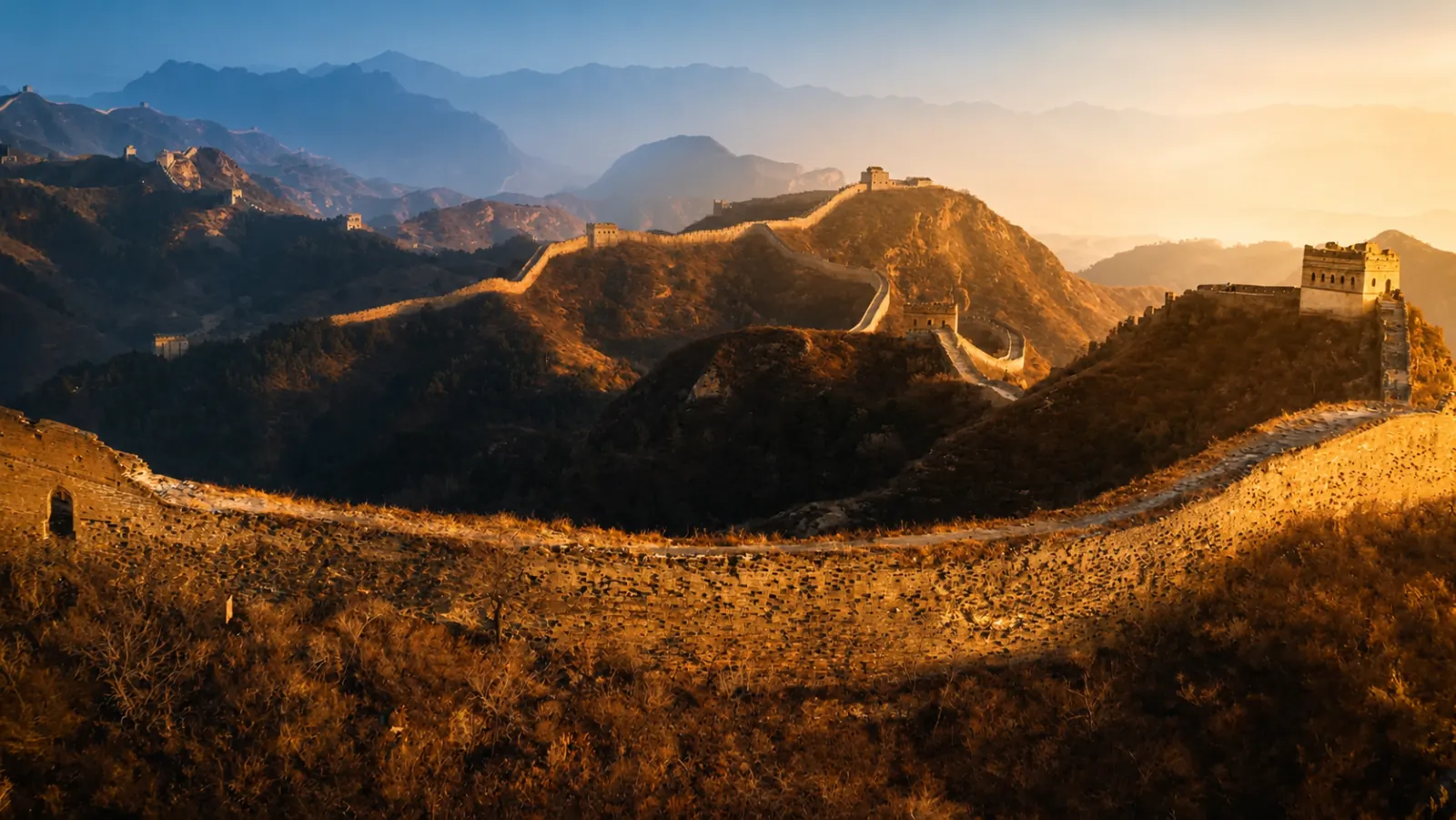
Mutianyu, Badaling and other wall sections are transport projects. Each has its own transfer, entry process, walking demands and last-return risk. Choose the section first, then decide on an official shuttle, train, private transfer or tour. Do not book a non-refundable evening performance or an early next-day train until the return journey is clear.
Entry, Visa and Arrival Planning
Beijing Capital and Beijing Daxing are international entry ports, but a flight arriving in Beijing does not by itself establish eligibility for visa-free entry or transit. China’s current 240-hour transit notice sets conditions around nationality, a confirmed onward journey to a third country or region, eligible ports and permitted areas. Use the China Travel Pulse visa checker for a planning assessment and verify the full route with the National Immigration Administration notice or the carrier before travel.
If you have a same-day domestic connection, leave a generous buffer for immigration, baggage and terminal transfer. Do not rely on an airline or booking site to infer that a transit permission applies to your passport and itinerary.
Arriving in Beijing
Beijing Capital International Airport — 北京首都国际机场 (PEK)
Capital Airport is in the north-east of the municipality. It is usually the more convenient airport for many central and east-side stays, though the correct choice still depends on the flight and your first night. Current flight networks change by season; Beijing’s government publishes updates for the two-airport system, so check the airline and the latest airport notice rather than assuming a route always uses PEK.
Airport rail, buses, official taxis and ride-hailing all have a role. Rail is usually the easiest way to avoid road congestion when your hotel connects well; a taxi can be more practical after a long international arrival, with children or heavy luggage. Keep the full Chinese hotel address, not just its English name.
Beijing Daxing International Airport — 北京大兴国际机场 (PKX)
Daxing lies far south of the central districts. It is a good airport, but it is not a quick substitute for Capital Airport if your hotel or early train is in the north or east. The Daxing Airport Express links the airport with the city network via Caoqiao, while buses and taxis can suit different hotel directions. Recent official information notes an earlier 05:30 first express departure and expanded airport-bus connections, but exact operating hours should be reconfirmed on the current Daxing transport update.
For a very late arrival, decide in advance whether to stay near the airport, use an official late service, or book a car. Do not assume the last rail service will still be running after a delayed flight clears immigration.
Which Railway Station Should You Use?
The word “Beijing” on an itinerary is not enough. Check the full station name in Chinese and English on the ticket before booking a hotel or car.
Beijing South Railway Station — 北京南站
Beijing South is a major hub for services towards Tianjin, the Yangtze River Delta and Shanghai. It connects to Metro Lines 4 and 14. The station authority specifically advises passengers to favour metro or buses in peak periods because taxi waits can be long; its pickup areas are also on different underground levels. See the station access guidance before an early departure.
Beijing West Railway Station — 北京西站
Beijing West matters for many west- and south-west-bound services, including routes towards Xi’an, Chengdu, Chongqing, Wuhan and Guangzhou. It is not near Beijing South. Book a hotel near West Station only if your train timing makes that convenience worth giving up central sightseeing access.
Beijing Railway Station, Chaoyang and Fengtai
Beijing Railway Station is closer to the traditional centre, while Chaoyang and Fengtai serve other corridors. The city’s rail guidance describes distinct route patterns from its major stations, including Beijing South’s strong eastern and southern links and Beijing West’s westward network. Use the official station overview as a starting point, then confirm your exact train in 12306.
Five Things to Confirm Before Taking a Train
- The exact station name, not just “Beijing”.
- The station entrance and your hotel-to-station route in Chinese.
- Whether your ticket and passport details match exactly.
- How long the security queue, station walk and platform access may take.
- A backup taxi or metro plan if rain, luggage or rush hour changes the journey.
Where to Stay in Beijing
Wangfujing, Dongcheng or nearby hutong districts
Best for a first visit focused on the historic core, early starts and central evenings. Avoid choosing a picturesque hutong stay without confirming vehicle access, luggage handling and the actual nearest metro station.
Sanlitun, Chaoyang or the CBD
Best for east-side business, dining and a Capital Airport-oriented itinerary. Less efficient for a west-side day or a Beijing West departure.
Qianmen or Temple of Heaven direction
Useful for travellers who want a south-central base and a simpler route to Beijing South. Confirm how far the hotel is from the metro; a map pin inside a pedestrian district can conceal a longer walk with bags.
Near a railway station: only for a short connection
A station hotel can be sensible for one early departure, especially at Beijing South or West. For a multi-day visit it often sacrifices evening convenience and makes the city feel more fragmented.
Getting Around Beijing
Metro and urban rail
The metro is usually the most reliable way to cross the city, but large interchanges and security checks add time. Do not plan a transfer based on the coloured lines alone: allow for walking inside the station, finding the correct exit and then reaching the actual entrance of a museum or palace complex.
Taxis and ride-hailing
Use them for the last kilometre, airport luggage, rainy weather and journeys where a transfer would consume an hour. At airports and stations, follow the official taxi queue or designated ride-hailing pickup area. A screenshot of the Chinese address is more useful than repeatedly saying an English hotel name.
Buses and special transport
Buses can be useful once you understand the route, but they are not the easiest first choice on a time-critical day. For the Great Wall, use a transport plan linked to the exact section and keep return details offline on your phone.
Maps, Addresses, Payments and Useful Apps
Save these names before arrival:
- Beijing Capital International Airport — 北京首都国际机场
- Beijing Daxing International Airport — 北京大兴国际机场
- Beijing South Railway Station — 北京南站
- Beijing West Railway Station — 北京西站
- Beijing Railway Station — 北京站
- Forbidden City / Palace Museum — 故宫博物院
- Tiananmen Square — 天安门广场
- Temple of Heaven — 天坛公园
For every reservation, keep the Chinese place name, full address, nearest metro station and exit, official entrance, telephone number and ride-hailing pickup point. This matters because a site may have a different visitor gate, staff gate and map pin.
Reservations, Tickets and Passport Checks
In Beijing, reservations shape the day. Major cultural venues can require timed entry, may release tickets on a changing schedule and can have separate rules for overseas passports. Carry the original passport used for the booking, arrive for security with time to spare, and take a screenshot of the confirmation in case a mini-program or mobile connection fails.
Use the attraction’s official booking page rather than a social-media screenshot. Some sites close on regular days or alter entry arrangements for events; opening hours and ticket releases are operational details, not permanent travel facts. If a booking is central to the trip, verify it again in the week before travel.
How to Plan Each Day in Beijing
Keep the historic core together
Build a day around one booked anchor, then add nearby walking areas only if the entry time allows. Avoid starting at the Summer Palace, returning to the centre for a fixed museum slot and then heading north for dinner.
Treat north-west sites as a separate day
The Summer Palace and nearby north-west destinations are better paired with each other than with central Beijing. This is especially important in summer heat or when travelling with children.
Keep departure-day plans small
On a Beijing South or West departure day, pick an activity on the correct side of the city or leave it open. Crossing Beijing with bags after lunch is a common avoidable stress point.
Walking, Terrain and Weather
Beijing is flatter than many Chinese cities, but it can be physically demanding because distances are large. Major squares, palace compounds, metro interchanges and stations require sustained walking, often through security. Wear shoes suitable for an entire day, carry water in warm weather and avoid putting a fixed reservation immediately after a long station arrival.
The Great Wall has a very different demand profile: uneven surfaces, stairs, sun exposure and weather can turn a short visit into a strenuous outing. Choose the section and route with the least mobile member of the group in mind.
How Weather Affects the Trip
Summer heat, heavy rain and winter cold change how the city works. Heat makes exposed palace grounds and wall walks slower; rain increases taxi demand and can make transfer-heavy days unpleasant; winter wind is amplified in open squares and at the Wall. Poor weather is a reason to move a museum day forward, not to cancel every plan.
During major holidays, weather is only one pressure. Trains, airport transport, reservations and restaurants can all be crowded. Keep a flexible day at the start or end of a Beijing stay if the schedule includes an international arrival or a hard-to-replace rail ticket.
Eating in Beijing: What Visitors Should Know
The practical challenge is often menu access and timing, not finding food. In central and business districts, QR ordering is common; ask staff for a paper menu or help if the system does not accept an overseas number. Book or arrive early for popular restaurants on weekends.
Useful phrases:
- 不要辣 — bú yào là — no chilli
- 不要花生 — bú yào huāshēng — no peanuts
- 我对海鲜过敏 — wǒ duì hǎixiān guòmǐn — I am allergic to seafood
- 这个有肉吗?— zhège yǒu ròu ma — does this contain meat?
- 请给我一杯热水 — qǐng gěi wǒ yì bēi rè shuǐ — hot water, please
Payments, Internet and Useful Apps
Set up a working payment method, a map that can search Chinese names, translation and rail booking before arrival. Keep a second payment method and some cash for contingencies. Beijing’s transport and attraction systems are increasingly digital, but a saved reservation, Chinese address and power bank remain more valuable than a long list of apps.
See our guides to payments in China, map apps, high-speed rail and attraction bookings.
Common Mistakes and High-Pressure Periods
Booking the cheaper airport without checking the district
PEK and PKX are not interchangeable for a hotel in the north-east, west or south of the city.
Treating the Great Wall as a central attraction
It needs dedicated transport, weather tolerance and a return plan.
Assuming one station serves the whole city
Beijing South, West, Chaoyang and Fengtai can lead to entirely different parts of the network.
Booking a hotel by landmark rather than access
An address “near Tiananmen” can still mean a long walk, a pedestrian restriction or poor rail access.
Scheduling three gated sites in one day
Reservations, bag checks and security queues are real travel time.
Saving only English map pins
Chinese names, entrance details and station exits are the useful information when a driver or guard needs to help.
Leaving airport or railway transport until arrival
Late flights and early trains make the last-service question important.
Underestimating a hot or cold Wall day
The city forecast is not the whole story for an exposed outer-district hike.
When to Plan More Carefully
National holidays, school breaks, weekends and major events bring higher pressure to stations, popular cultural sites and hotel districts. Exact dates change annually, so check the official holiday calendar and each venue’s notice before buying non-refundable transport. During peak periods, make reservations first, arrive earlier than usual and avoid a same-day train immediately after a major site.
Leaving Beijing for Your Next Destination
Beijing is a strong rail gateway, but choose the next city before choosing the station hotel. Beijing South is often the natural departure point for Shanghai, Nanjing, Hangzhou and Tianjin. Beijing West is relevant for many services towards Xi’an, Chengdu, Chongqing, Wuhan, Changsha and Guangzhou. Confirm the actual train rather than relying on a route summary.
For an airport departure after a rail arrival, do not plan the buffer on timetable minutes alone. Add time for the station exit, road or metro transfer, airport terminal, bag drop and security. A night near the correct airport can be the calmest choice before an early international flight.
Before You Travel: Beijing Checklist
Entry and documents
- Confirm your entry permission against the complete route, not Beijing alone.
- Carry the original passport used for rail and attraction bookings.
Airport
- Check whether the flight uses PEK or PKX.
- Save your hotel’s Chinese address and a late-arrival backup plan.
Railway
- Confirm the full station name and the correct departure entrance.
- Do not schedule a cross-city visit immediately before an early train.
Accommodation
- Choose a district that matches the first two days, not an abstract city centre.
- Check pedestrian-zone and luggage access for hutong properties.
Reservations
- Book the main timed entry first and keep confirmations offline.
- Recheck opening arrangements shortly before travel.
Phone and payment
- Carry a power bank and a second payment option.
- Save Chinese names, exits and entrance pins.
Weather and equipment
- Pack for open, exposed walking and a separate Great Wall day.
- Adjust the day order for heat, rain or severe winter weather.
Before leaving the hotel each day
- Confirm the booked entrance, passport, metro exit and return route.
Final Takeaway
Beijing is worth the planning because its most rewarding days are structured days: one district, one secured entry, enough time to reach the right gate and room to change course when weather or crowds intervene.
The single most useful decision is usually the accommodation base. The most common mistake is assuming the city, its airports and its Wall sections behave as one compact destination. They do not.
Give the city enough days, treat stations and airports as real geographic choices, and keep one major reservation at the centre of each day. Beijing then becomes far less intimidating and much easier to enjoy on its own terms.
Related China Travel Pulse Guides
- China visa and transit checker
- China airport transfer guide
- China high-speed rail guide
- How to book attractions in China
- Best map apps for China
Last reviewed: July 2026
Airport transport, railway services, reservation rules, opening arrangements, entry policies and local transport procedures may change. Check official sources again before travelling.